

In partnership with the Income Protection Task Force (IPTF), we are proud to launch the third edition of the Profile of an Income Protection Customer report.
Drawing on nearly 55,000 applications submitted via The Exchange during 2025, this latest edition offers one of the most comprehensive pictures yet of the UK Income Protection market, revealing how customer behaviour, adviser trends and protection needs continue to evolve.
The findings show a market with real momentum. Income Protection sales are growing, younger consumers are engaging earlier, and advisers are increasingly embracing holistic protection planning through multi-benefit solutions. At the same time, the research highlights ongoing affordability pressures and a significant protection gap that continues to leave millions financially exposed.
We're pleased to offer this report once again free of charge. Download the full version here and explore some of the standout themes below.

5 headline findings from the report
1. A growth year for Income Protection
The data shows continued positive momentum across the Income Protection market in 2025, with applications rising by 7% overall compared to 2024.
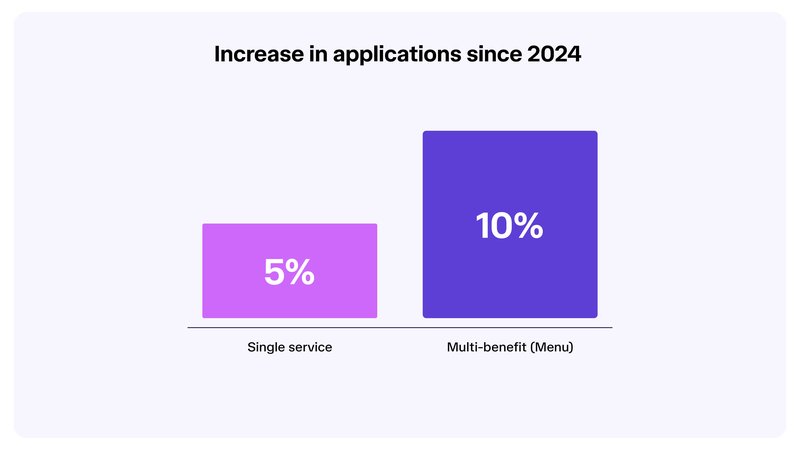
Growth has been strongest in multi-benefit or menu plans, where Income Protection benefits increased by 10%, while standalone Income Protection applications also continued to grow steadily at 5%.
This reflects increasing recognition of Income Protection as a core component of wider financial resilience planning - both among advisers and consumers. But where is this growth coming from, and which customer segments are driving it most strongly?
Download the full report for the complete analysis and breakdown of market growth.
2. The rise of multi-benefit protection
One of the clearest trends in this year’s research is the continued acceleration of Income Protection within multi-benefit plans.
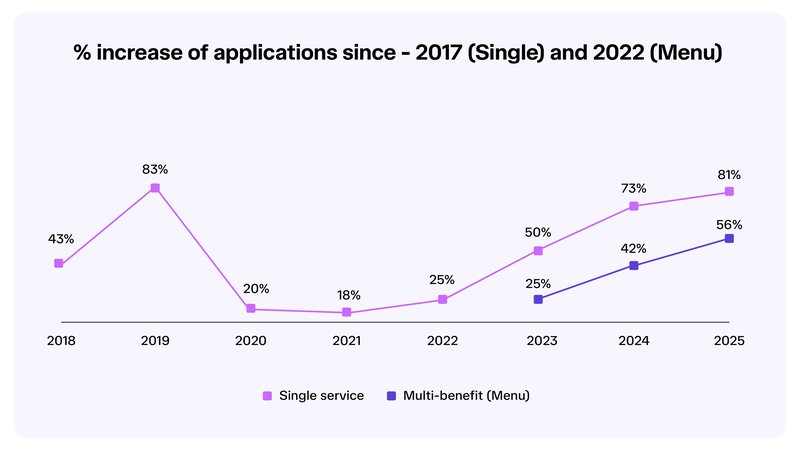
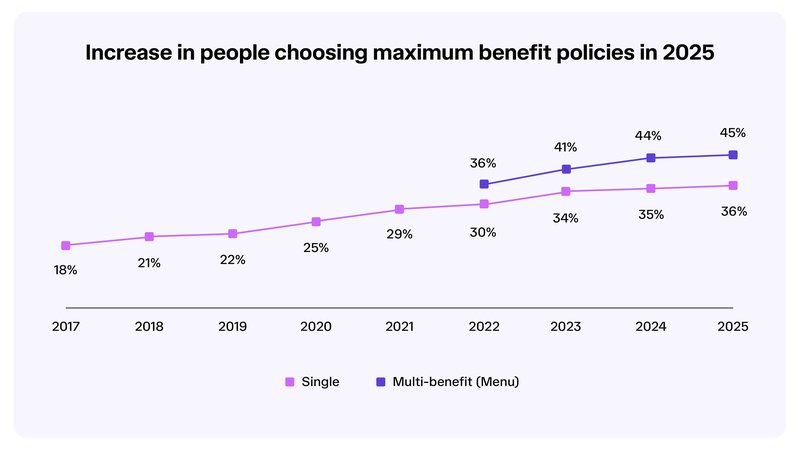
Since 2022, Income Protection benefits sold through menu plans have increased by 56%, now accounting for almost half of all Income Protection benefit applications. Within those plans, one in five selected benefits is now Income Protection.
This signals more than a product shift. It reflects a broader evolution in advice strategy, with advisers increasingly moving towards integrated protection planning that combines multiple forms of cover into a single financial safety net.
Read the full report to understand what’s driving this shift and how it’s reshaping advice.
3. Younger consumers are engaging earlier
For years, the industry has discussed how to make Income Protection more relevant to younger consumers. The data suggests that the shift is now happening at scale.
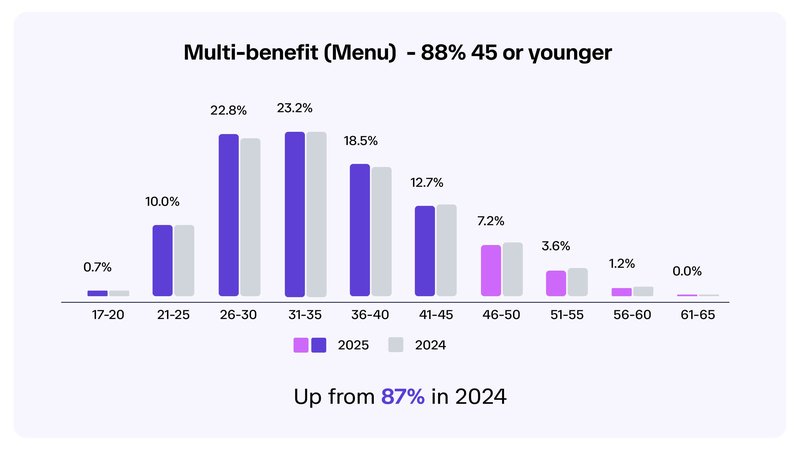
In multi-benefit plans, 88% of applications are now for customers aged 45 or under, with the average age of buyers falling to just 35. The standalone market is also becoming younger, with nearly three-quarters of buyers now aged 45 or below.
One particularly striking trend is the rise in younger customers taking out accident-only cover. In 2025, 69% of those applications came from under-45s - up from 63% last year and just 55% in 2022.
The report identifies what it describes as a “milestone convergence” among consumers in their early 30s, in which life events such as mortgages, families and rising costs are driving earlier engagement with protection.
Download the full report to explore the detailed demographic and behavioural insights.
4. People are planning to work longer
While the market is getting younger at the front end, policy terms are stretching further into later life.
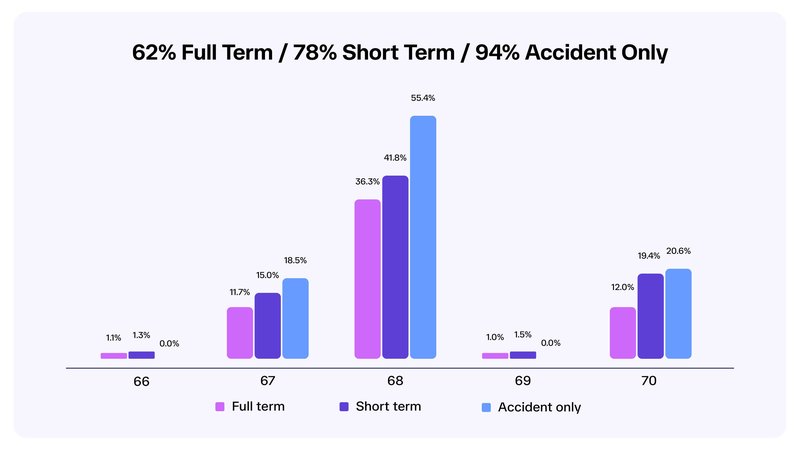
More than 70% of standalone Income Protection policies now run into retirement, while multi-benefit plans running into retirement have risen from 58% to 62% in just one year.
The findings closely mirror wider changes in the UK mortgage market. Analysis of KFI data shows that nearly two-thirds of mortgages now end at age 66 or later, with the most common mortgage end ages now 68, 69 and 74.
The result is a growing need for Income Protection solutions that reflect the reality of longer working lives and extended financial commitments.
Read the full report for deeper insight into protection policy trends.
5. The affordability challenge remains
Despite strong growth, the report also highlights an important challenge facing the market: affordability.
The positive news is that consumers are trying to protect more income. Across almost every category analysed, average monthly benefit levels increased during 2025. For example, the average benefit on a full-term standalone policy rose by nearly £78 per month.
However, those increases still fall significantly short of typical household expenditure.
On average, benefit amounts remain around £1,200 below estimated monthly living costs for standalone Income Protection customers, and approximately £1,600 below for customers with multi-benefit plans. With average monthly expenditure for UK mortgage holders estimated at £3,516, many households may still be insuring only their most essential outgoings.
The findings raise important questions for the industry: are customers buying enough cover to withstand a genuine income shock, or are affordability pressures forcing protection decisions to become increasingly budget-driven?
Download the full report for the complete affordability analysis.
The opportunity ahead
This year’s findings demonstrate clear and growing demand for Income Protection. Younger consumers are engaging earlier, integrated protection planning is gaining traction, and advisers continue to play a critical role in improving financial resilience.
Yet significant gaps remain. More than 85% of Income Protection needs in the UK are still estimated to be unmet, leaving millions financially exposed should illness or injury prevent them from working.
At Iress, we are proud to work alongside the industry to make this insight available. This report has been developed collaboratively with the IPTF, reflecting a shared commitment to improving understanding, strengthening advice, and growing the protection market.
But closing the protection gap will require continued collaboration across the entire ecosystem - advisers, providers, distributors and technology partners - working together to improve access, clarity and outcomes for consumers.
The Income Protection landscape is evolving rapidly. Understanding these shifts will be critical for firms looking to grow, adapt and better support their clients in 2026 and beyond.
Moving the protection industry forward
We encourage everyone with an interest in the future of the protection market to download the full report. We would also like to extend our sincere thanks to the Income Protection Task Force (IPTF) and all our contributors for their expertise, collaboration and commitment to moving the protection industry forward.
Profile of an Income Protection Customer
Third edition: Maximising the Market
Download the full Profile of an IP Customer report to access the complete findings, detailed market analysis and strategic insights shaping the future of protection.
